Daniel Defoe built a house with a great many doors on Church Street. Then he wrote Robinson Crusoe
Defoe lived in Stoke Newington for about twenty years. His house was pulled down in the 1860s and its garden became Defoe Road. A 1932 plaque on no. 95 is what remains.
By Elizabeth Cole · · 2 min read
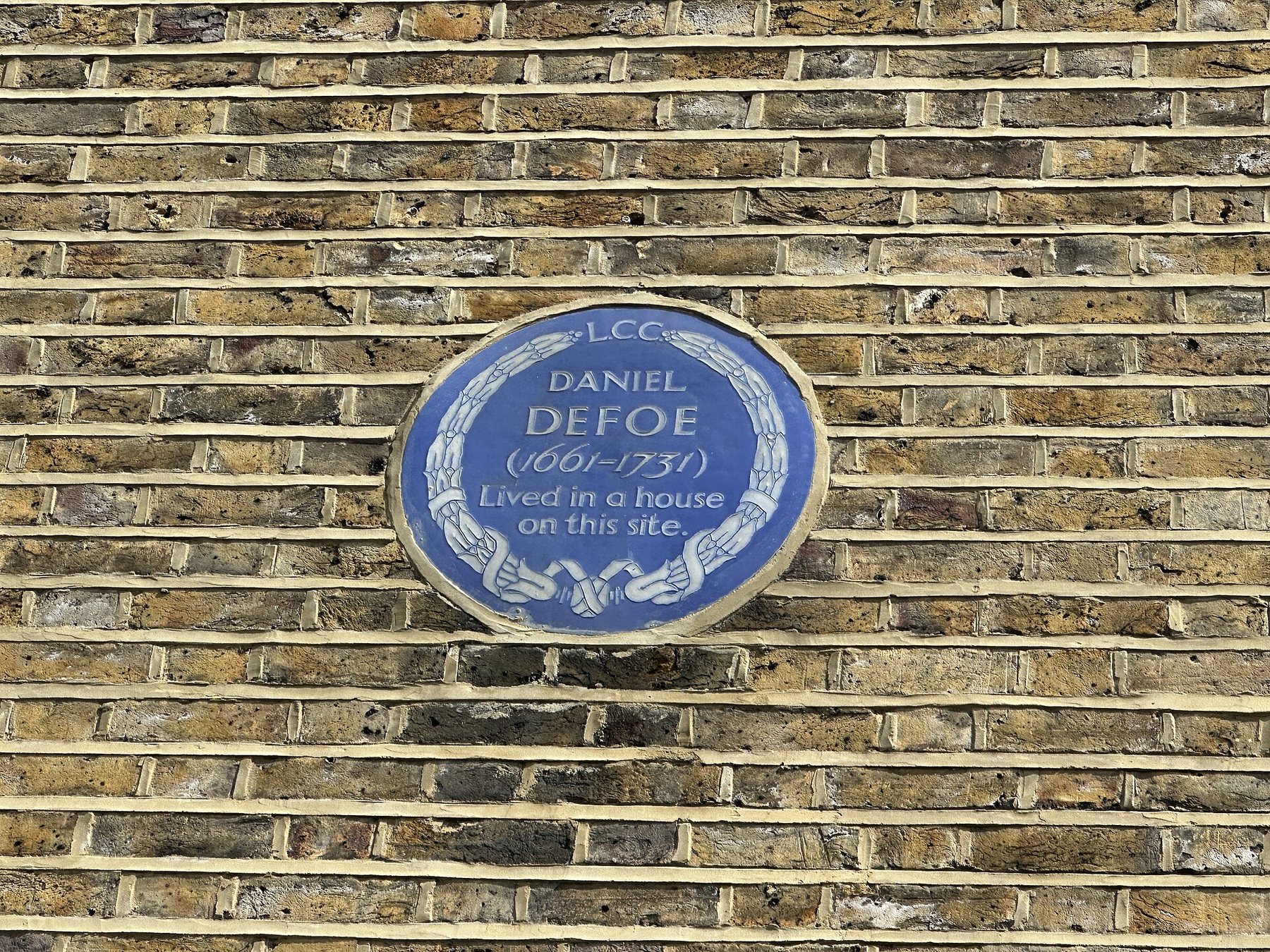
Daniel Defoe was living in a rented house on the north side of Church Street by 1709, according to the Victoria County History. By about 1714 he had moved across the road to the site of what is now no. 95, and either repaired or rebuilt the house there; historians still argue about which. What he ended up with was a three-bay central block under a pediment, with wings on either side, and a large garden bounded by Hussey's Lane and Pawnbroker's Lane.
He needed the space. Defoe was a dissenter, a pamphleteer who had been pilloried, a suspected government agent and a businessman of heroic instability. By his own count he had been "thirteen times rich and thirteen times poor". The local historian Jack Whitehead lists some of the enterprises: a civet cat farm on Newington Green, a tile factory that went bankrupt, South Sea shares. Jonathan Swift could not bring himself to use his name:
"One of these Authors (the Fellow that was pilloried, I have forgot his Name) is indeed so grave a sententious, dogmatical, a Rogue, that there is no enduring him."
Jonathan Swift, quoted by Jack Whitehead
The house matched the man. An old description that Whitehead quotes calls it "a gloomy and irregular pile of red brick", "remarkable for its number of doors with massive locks and bolts". A suspected spy with creditors might want both.
Robinson Crusoe came out in 1719, written in that house. There may even have been a local model for the castaway. The Drury family were neighbours, and their son Robert was shipwrecked off Madagascar in 1703 and not rescued until 1717. The Victoria County History calls him "probably the inspiration" for Crusoe.
Defoe's house and estate were sold in the 1860s. By 1870 the house was gone, Defoe Road had been started, and between 1875 and 1876 builders put up 53 terraced houses on the garden. Whitehead points out that the bricks were probably made from the London clay they stood on: "The houses were not just built on Defoe's garden: they were built of his garden."
The London County Council put a plaque on no. 95 in 1932. It says, with an estate agent's caution, "Lived in a house on this site." Pawnbroker's Lane, along the edge of his garden, is now Kynaston Road. For a man who had been thirteen times poor, losing the pawnbroker seems tactful.
Sources
More in Arts
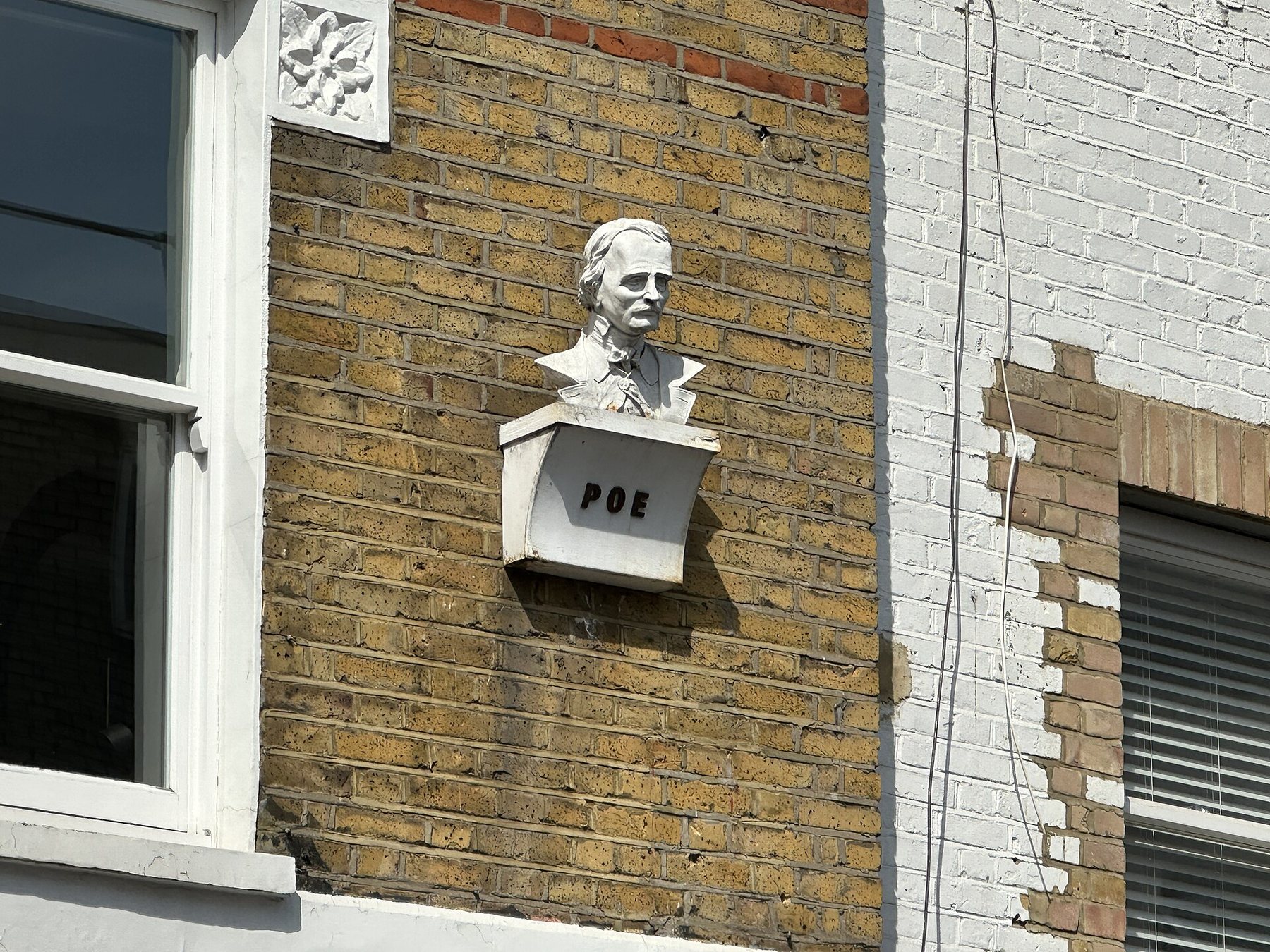
Image: Matt Brown, CC BY 2.0, via Wikimedia Commons
Edgar Allan Poe learned to dance on Church Street. Then he put his headmaster in a story
From 1818 to 1820 a boy registered as Edgar Allan boarded at the Reverend John Bransby's Manor House School. Two decades later Poe put the village, the church and his headmaster into a story about a man haunted by his double.
28 November 2026
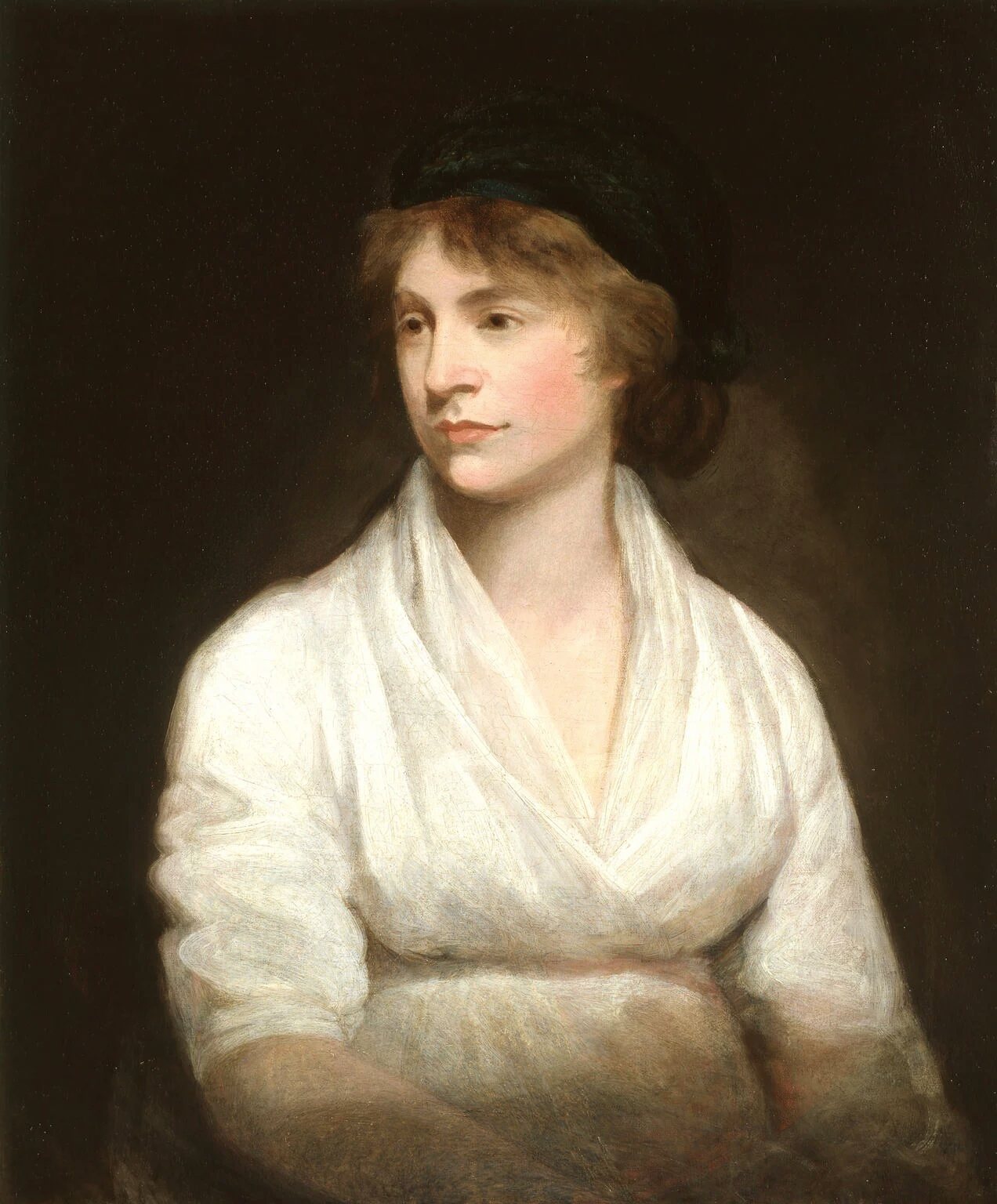
Image: John Opie, c. 1797, National Portrait Gallery (public domain), via Wikimedia Commons
Mary Wollstonecraft ran a school on Newington Green. The green has been arguing about her ever since
In 1784 she opened a girls' school here and found a mentor in Richard Price at the Meeting House. In 2020 Maggi Hambling's sculpture arrived on the green, and with it a row.
28 November 2026
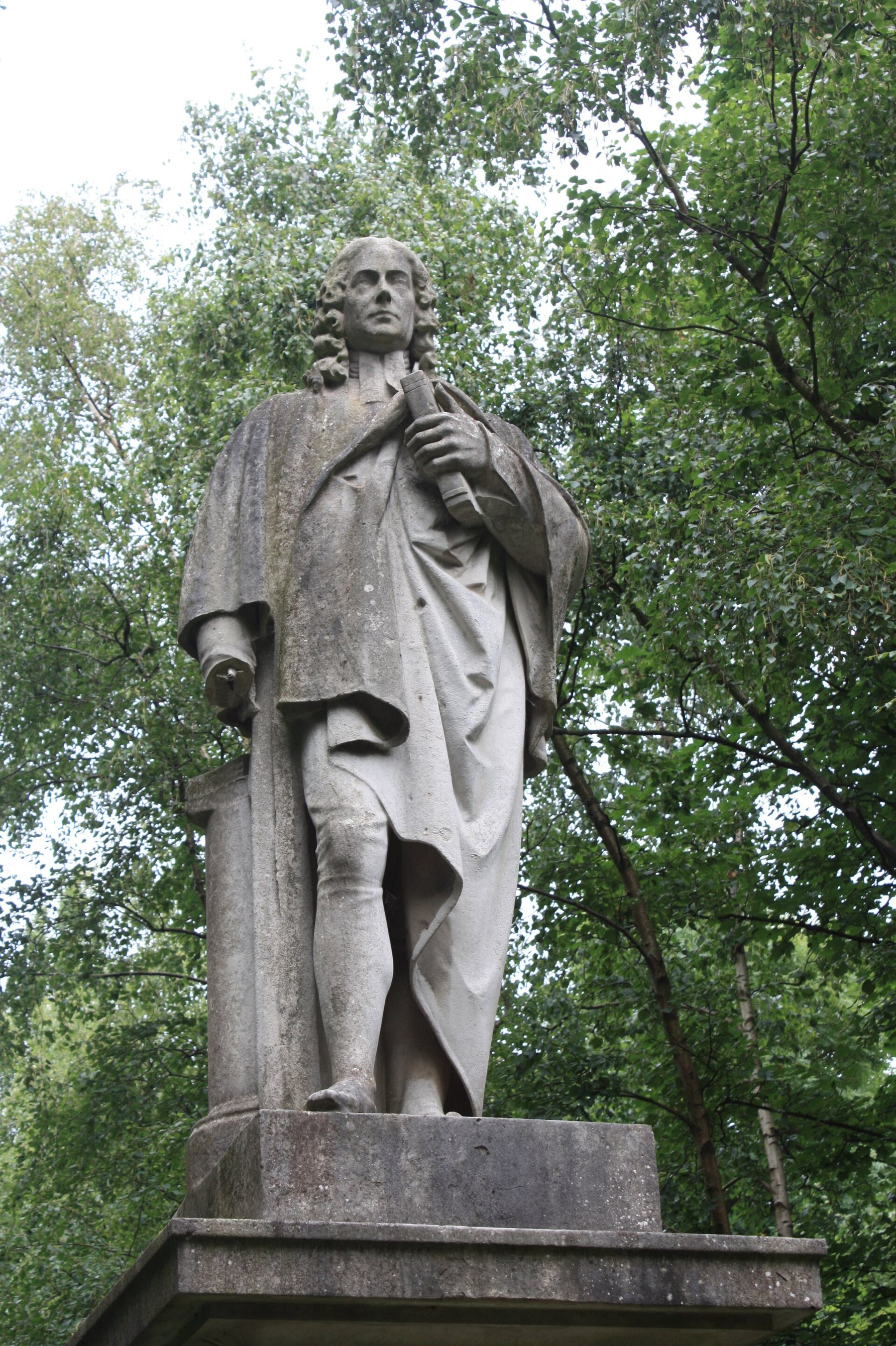
Image: Stephencdickson, CC BY-SA 4.0, via Wikimedia Commons
A lion, a hymn-writer and the founder of the Salvation Army: reading Abney Park's monuments
Abney Park opened in 1840 as a cemetery and arboretum open to dissenters and anyone else. Its stones are a short course in Victorian London, if you take the Trust's route.
28 November 2026