Edgar Allan Poe learned to dance on Church Street. Then he put his headmaster in a story
From 1818 to 1820 a boy registered as Edgar Allan boarded at the Reverend John Bransby's Manor House School. Two decades later Poe put the village, the church and his headmaster into a story about a man haunted by his double.
By Elizabeth Cole · · 2 min read
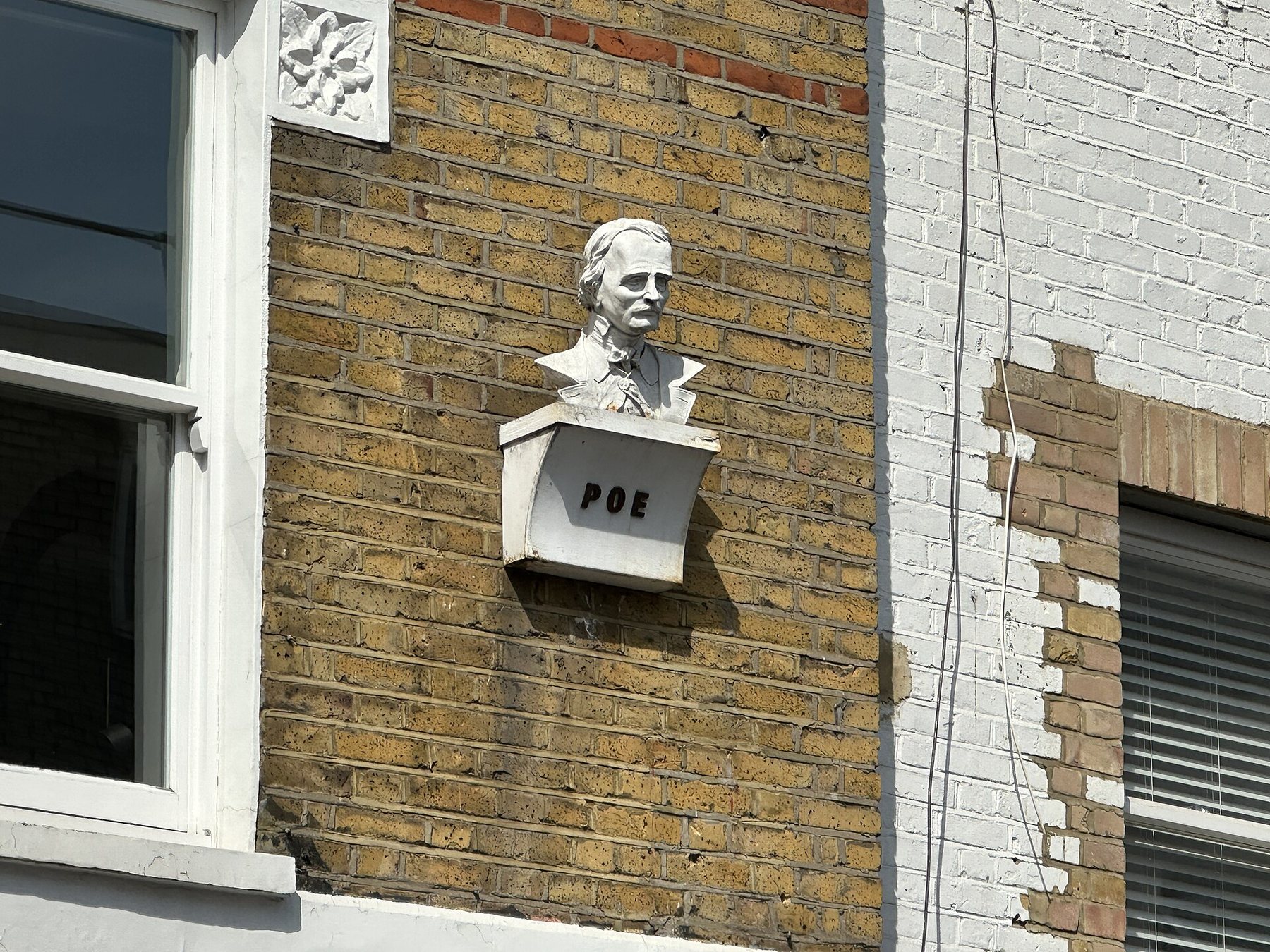
In 1818 a nine-year-old American started at the Manor House School on Stoke Newington Church Street. The register knew him as Edgar Allan, after John Allan, the Richmond merchant whose family had taken him in when his mother died in 1811. The Allans had sailed for England in 1815, parked him first at a boarding school in Chelsea, and moved him to Stoke Newington for two years before the family went home in 1820.
The Edgar Allan Poe Society of Baltimore, which keeps the most careful chronology of his life, notes that dancing was among his subjects. The headmaster was the Reverend John Bransby, who, according to Poe, also preached at St Mary's down the road.
Poe paid the school back in 1839, in "William Wilson", a story about a man followed through life by a boy with his name, his birthday and eventually his face. The narrator's schooldays are set in a village that is plainly this one, which he remembers as "a dream like and spirit soothing place, that venerable old town", and he describes "the deep hollow note of the church-bell, breaking, each hour, with sullen and sudden roar, upon the stillness of the dusky atmosphere in which the fretted gothic steeple lay imbedded and asleep."
Bransby appears under his own name, and does not get off lightly. On Sundays the narrator watches the headmaster in the pulpit of St Mary's:
"…could this be he who, of late, with sour visage, and in snuffy habiliments, administered, ferule in hand, the Draconian laws of the academy?"
Edgar Allan Poe, "William Wilson" (1839)
A ferule is a flat ruler for hitting boys. The paradox, Poe decided, was "too utterly monstrous for solution".
The school is commemorated now by a bust of Poe above the door of The Fox Reformed, the wine bar on Church Street, which the Poe Museum in Richmond described in 2011 as "exactly on the site of the old school house". It was made by the sculptor Ralph Perrott, modelled in clay and cast in resin with a stone facade, and unveiled by Steven Berkoff on 4 June 2011, during a day of Poe events at the Stoke Newington Literary Festival. The programme had Berkoff introducing his own film of The Tell-Tale Heart beforehand, and ended with Roger Corman's The Masque of the Red Death, as a nod to Vincent Price's centenary.
Perrott's company, Talisman, specialised in military figurines. This was its second Poe. The first went to a Poe festival in Prague in 1999.
Sources
More in Arts
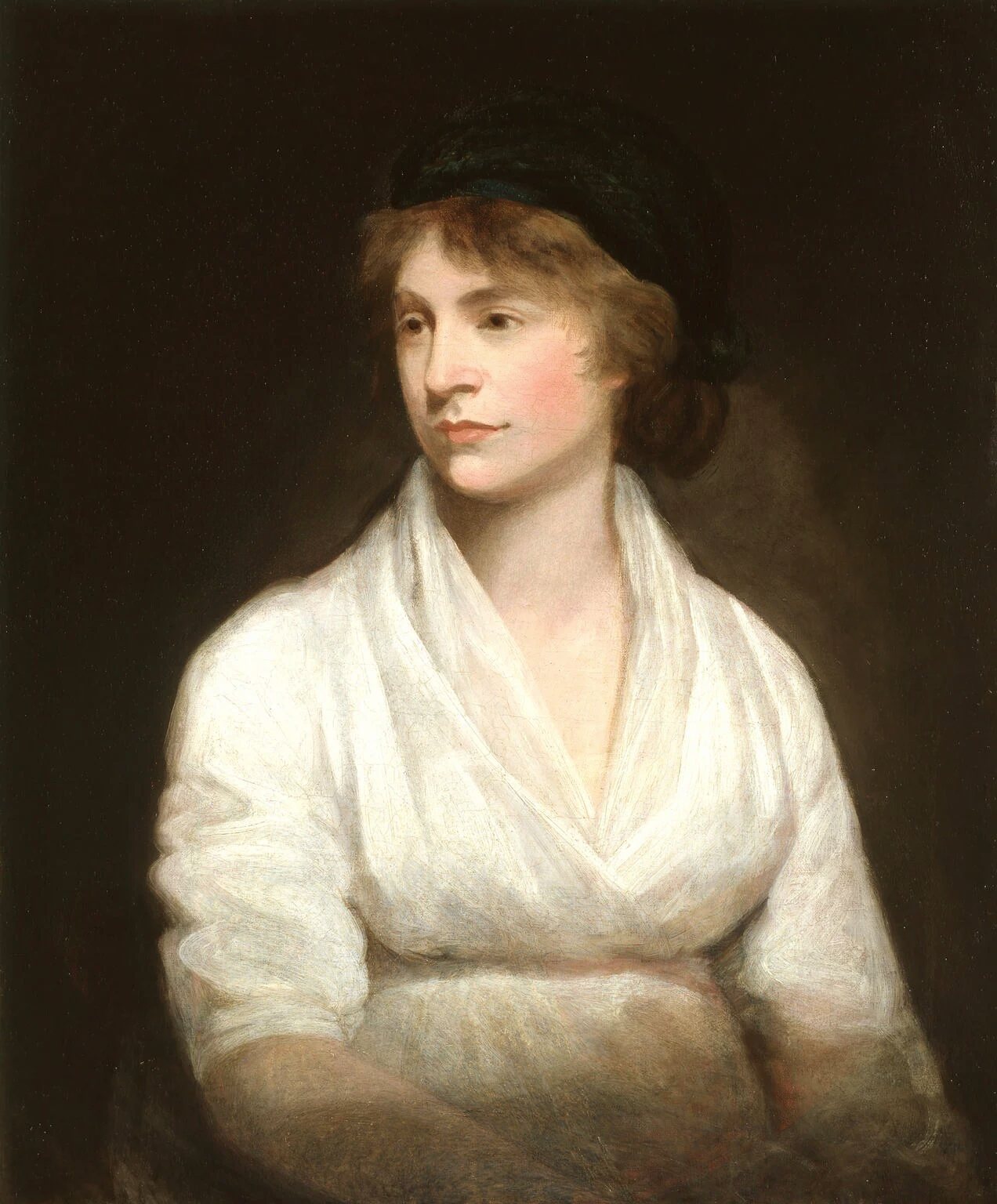
Image: John Opie, c. 1797, National Portrait Gallery (public domain), via Wikimedia Commons
Mary Wollstonecraft ran a school on Newington Green. The green has been arguing about her ever since
In 1784 she opened a girls' school here and found a mentor in Richard Price at the Meeting House. In 2020 Maggi Hambling's sculpture arrived on the green, and with it a row.
28 November 2026
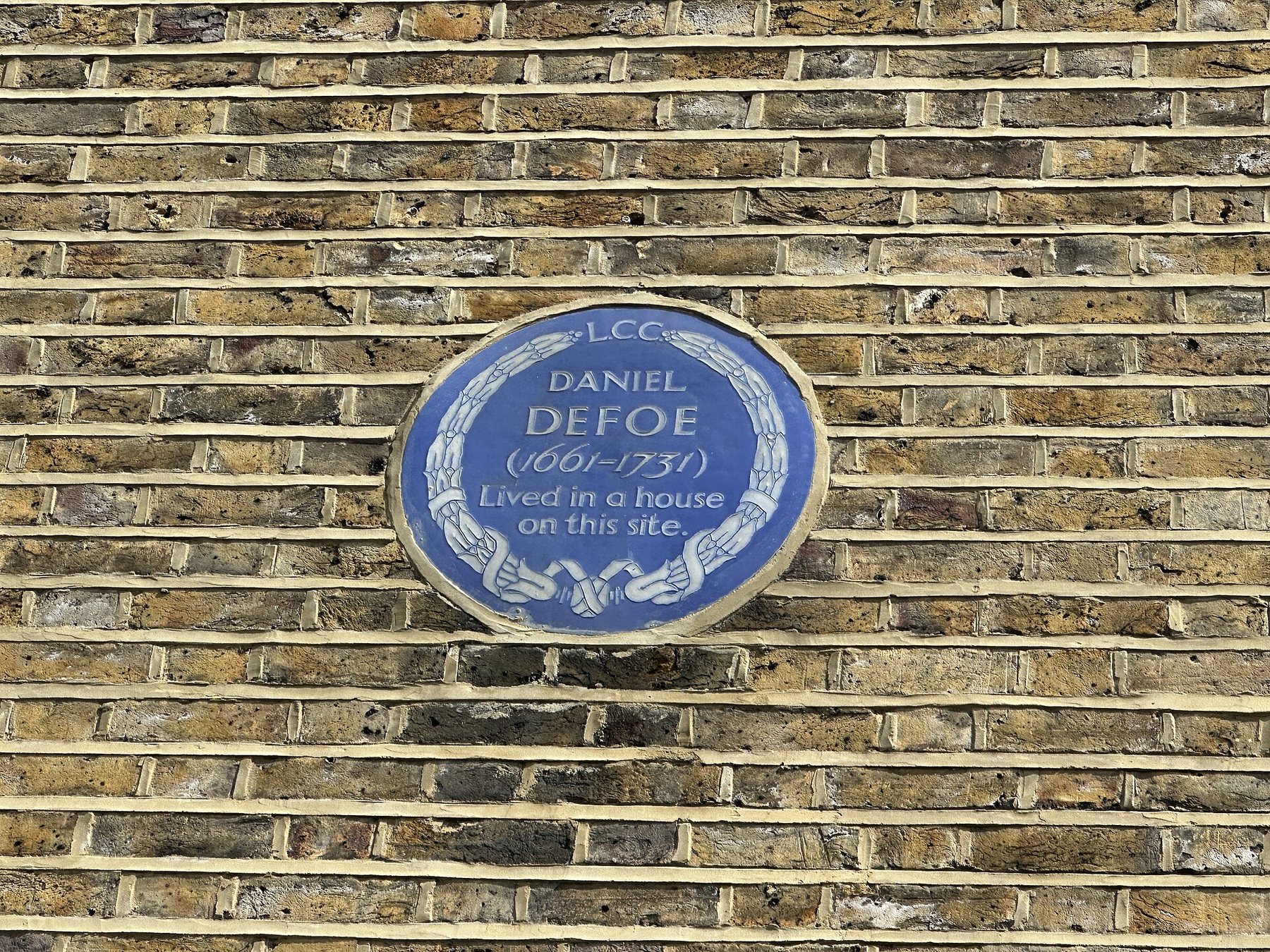
Image: Matt Brown, CC BY 2.0, via Wikimedia Commons
Daniel Defoe built a house with a great many doors on Church Street. Then he wrote Robinson Crusoe
Defoe lived in Stoke Newington for about twenty years. His house was pulled down in the 1860s and its garden became Defoe Road. A 1932 plaque on no. 95 is what remains.
28 November 2026
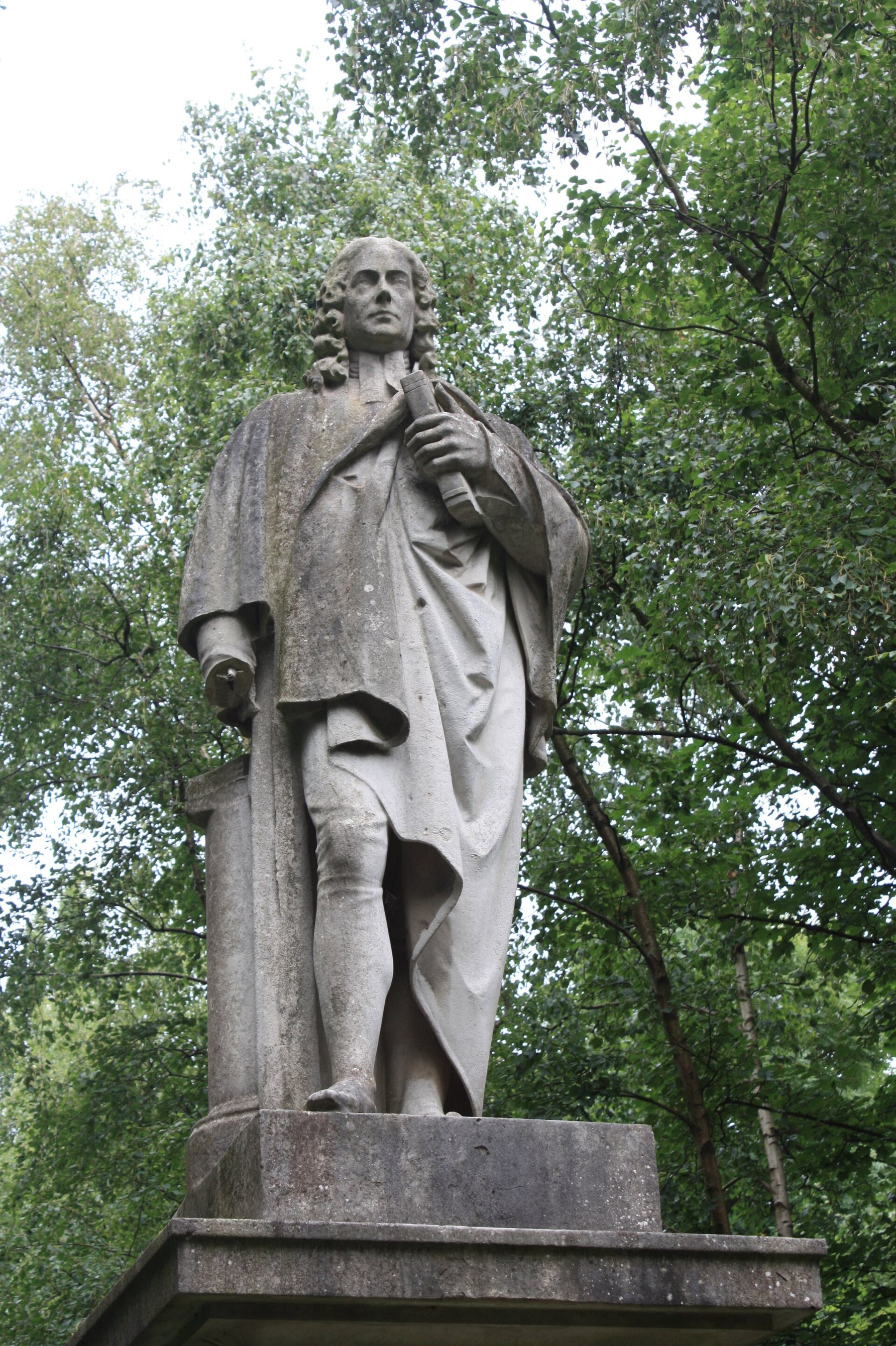
Image: Stephencdickson, CC BY-SA 4.0, via Wikimedia Commons
A lion, a hymn-writer and the founder of the Salvation Army: reading Abney Park's monuments
Abney Park opened in 1840 as a cemetery and arboretum open to dissenters and anyone else. Its stones are a short course in Victorian London, if you take the Trust's route.
28 November 2026